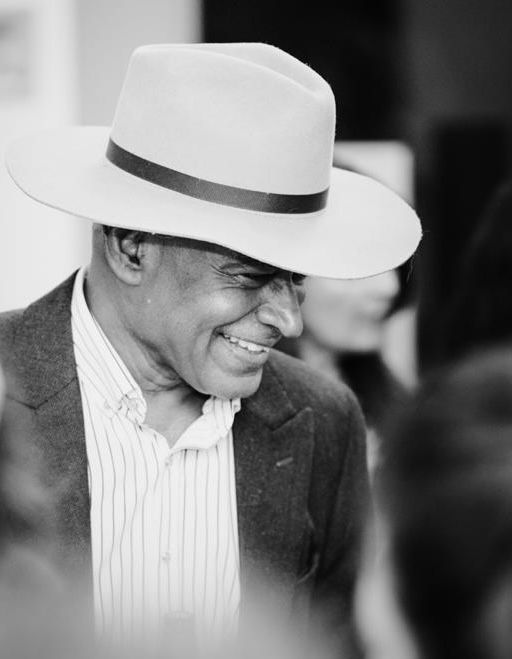
I began my journey as a philosophical person — it is even my earliest memory — a somewhat fearless thinker with a detachment from societal thinking norms, driven by a constant need for time alone. Even as a child, I used to wonder how inefficient we think, how emotional and egoistic we get, and I felt many societal problems were self-inflicted from this collective behavior.
Only after much education and prior to my Ph.D. did I fall upon the concepts of self-image from Psycho-Cybernetics by Maxwell Maltz. From then on I focused on social psychology and developed self-reflection, abstract thinking, fearless detachment from established thinking and other philosophical concepts. In parallel I was interested in science and engineering and had a strong career as a research scientist — and among many innovations I developed problem-solving tools. I felt I could bridge my science training into social psychology. My childhood interests kept tugging, and eventually — with a friend who shared the same interests — I perfected a set of decision-making tools. I tested them thoroughly, using them in my own decisions.
Then slowly I got caught up in the grinding wheels of life and started using less and less of the concepts, though they had led to early success. One challenge was going through the laborious thinking process to get to the solutions; it required high discipline to strictly follow the process. As we have less time to make decisions and more distractions, I stopped following the rigorous process for key decisions. That led to some failures.
After many years of struggling to keep the technique alive, AI suddenly made the process effortless. Simple prompts can keep the process intact. Now key decisions can be made very quickly, thanks to the speed of AI.
Combining the old wisdom with the new AI tools, I was able to synthesize deep philosophical approaches into a very simple 7-step process filter that runs on AI. All decisions can go through the 7 steps fast to reach critical decisions in any field for anyone — which is my goal.
The real innovation is in the philosophical 7-step process of problem solving, but AI makes it fast enough to go through these steps fairly easily — so the mental agony to stick to the process is taken away, while the filter still removes emotional biases, self-ego-based rigidness and fear-based approaches, and forces certain self-reflection. In the past, the fast-paced society did not allow fast yet rigorous decision making, because we do not take enough time to make important decisions on a more informed, impartial and judgement-free basis.
Now that's history.